 All Guides ↗
Most guides teach you to invest in single cards. This one is about sealed product, the booster boxes, elite trainer boxes, and bundles that quietly appreciate as the world cracks them open. It is the corner of the hobby where patient capital does best, and it is what TCG Quant was built to track.
A sealed booster box is a fixed-supply asset with a shrinking float. The print run is finite, and every day collectors and resellers open boxes to chase the rare cards inside. Those boxes never come back — which makes sealed a deflationary asset: once a set's print window closes, the supply can only shrink, never grow. Demand, meanwhile, tends to hold or grow as a set ages into nostalgia. Fixed and falling supply against steady demand is the classic setup for appreciation, and it is why vintage sealed product has outperformed most singles over long horizons.
Singles can spike faster, but they are also noisier, harder to authenticate, and exposed to grading luck. Sealed product trades on cleaner fundamentals: how many boxes exist, how fast they are being absorbed, and how strong the chase inside them is. Those are things you can actually measure.
You are not betting on one card getting lucky. You are betting that a finite supply of sealed boxes keeps shrinking while people keep wanting in.
Before you buy anything, understand the levers. TCG Quant tracks all four so you do not have to piece them together by hand.
Price alone tells you none of this. A $500 box with rising supply is a very different proposition from a $500 box with supply draining and a strong chase card. The rest of this guide walks through how to read each force.
The single most useful view for a beginner is the supply and demand overlay. It layers competitively-priced listings and daily sales volume against the price line. When the supply bars shrink while sales hold up and price grinds higher, the box is being absorbed faster than it is being listed. That is the window you want to catch before the price fully reflects it.
This is not just theory. Across 433 tracked entry windows, this supply-and-demand setup has carried an 77.1% signal-accuracy rate, with an average gain of +16.3% by eight weeks. Tightening supply into steady demand is the single most reliable relationship TCG Quant measures, and it is exactly what the overlay above is built to surface. These figures update with the platform, so they always match the live Track Record.
You will not have time to run this analysis on every set. The Long-Term Score, or LTS, does the first pass for you by folding appreciation history, chase value, and supply dynamics into one rating. Think of it as a filter that tells you where to spend your research time, not a buy button.
Here are four sealed products we track today, one from each end of the spectrum. Same category, very different setups. Notice how price does not map neatly to score: the highest LTS is not always the most expensive box.
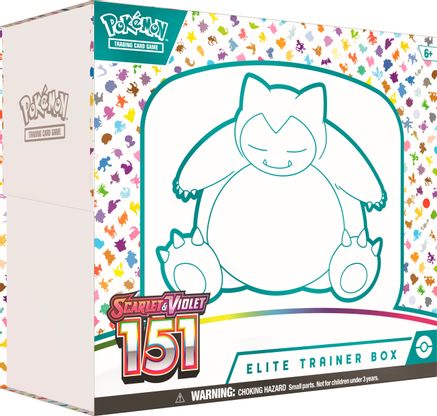


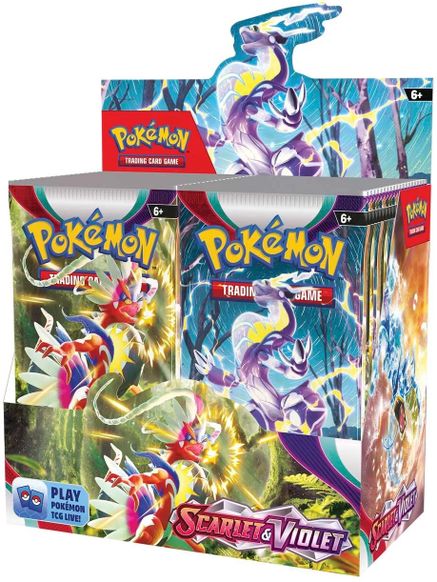
Treat sealed product as one slice of a broader financial portfolio — sitting alongside your stocks, retirement accounts, and other investments, not as a world unto itself. A sensible beginner approach is to keep collectibles to a small percentage of your total investable assets, only use money you will not need soon, and diversify across a few sets and eras rather than concentrating in a single box.
Within the hobby, risk runs on a spectrum, and sealed sits at the calmer end of it. Sealed trades on measurable fundamentals — supply, absorption, print run — and carries no condition or authenticity risk while the shrink wrap is intact. Single cards and graded slabs sit at the higher-risk end: prices are more volatile, outcomes hinge on grading luck and condition, and a single card can swing hard on one population report or reprint. Sealed will not spike the way a hot single can, but it also will not crater the same way, which is exactly why it suits patient, lower-risk capital. Spreading across price tiers helps too: pair a proven, higher-conviction hold with a smaller position in an earlier-stage setup.
Buying at peak hype, over-concentrating in one box, ignoring where supply is actually heading, and having no exit plan. The data exists to avoid all four. Use it before you buy, not after.
TCG Quant tracks supply, demand, pull rates, destruction, and Long-Term Scores across Pokemon and One Piece sealed product, updated daily.
Explore TCG Quant →