 All Guides ↗
Before you buy anything, you need the vocabulary. Sealed investing has its own set of product types and terms, and most guides skip straight past them. This is the plain-English starting point. Read this first, then everything else will make sense.
Sealed product is any factory-sealed item that has not been opened: the shrink wrap is intact and the cards inside are untouched. That seal is the whole point. It guarantees the contents, removes condition and authenticity questions, and means the item can only become rarer as copies get opened. When people talk about sealed investing, they mean buying and holding these unopened products rather than individual cards.
An opened box is just loose cards. A sealed box is a fixed-supply asset. The moment someone breaks the seal to chase the cards inside, that box is gone from the sealed market forever.
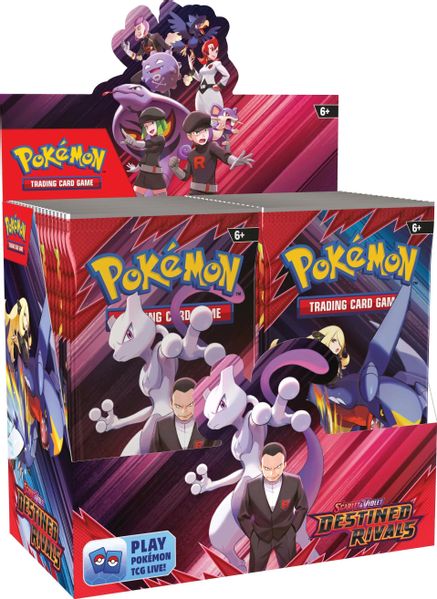
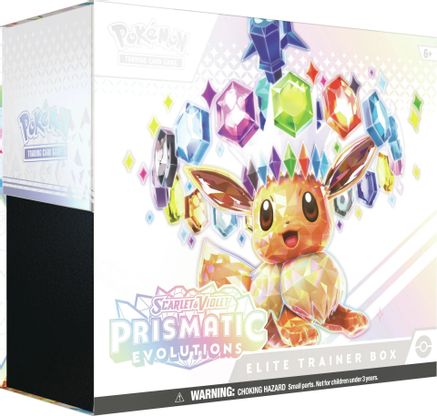
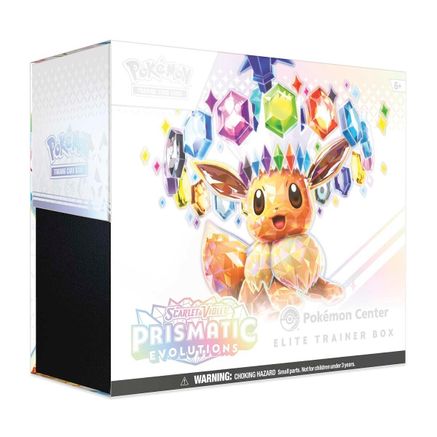
These are the formats you will see most often. Most of the examples below are the same set — Prismatic Evolutions — so you can see how a single set exists as several different products at very different price points, alongside a Destined Rivals booster box for contrast. Prices are live from the platform.
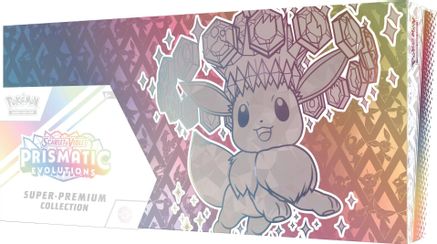
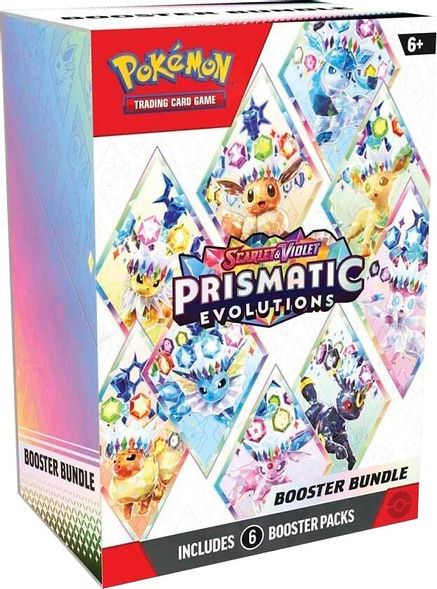
A case is a sealed carton of booster boxes, typically six. Cases are the wholesale unit and the deepest form of holding. When investors talk about "cracking a case," they mean breaking the seal on the case itself — not opening the boxes inside. Once a case is cracked, those boxes can either be opened for cards or sold off individually. It is the case seal that is broken, not the boxes.
The most valuable card in a set, the one people open boxes hoping to pull. Strong chase cards drive opening, which drains sealed supply.
The odds of pulling a given card or rarity from a pack. Lower odds mean a rarer, usually more valuable card. Covered in depth in our pull rates guide.
MSRP is the original suggested retail price. Market price is what the sealed product actually trades for now. The gap between them is the appreciation, and it can be large for out-of-print sets.
Whether a set is still being produced (in print) or has stopped (out of print). Out-of-print sets cannot get fresh supply, so opening starts to bite the float directly.
A deflationary asset is one whose supply can only shrink, never grow. Once a set's print window closes, no new sealed product is ever made — the existing supply only goes down as boxes are opened, and it never comes back. That one-directional shrink is what separates sealed from almost every other collectible, and it is the core reason sealed appreciates over time.
The float is the amount of sealed product still available on the market. As boxes are opened, the float shrinks. Watching the float is the heart of sealed investing.
The permanent removal of sealed product as boxes are opened. It is the quiet engine behind long-term appreciation, and TCG Quant measures it directly.
TCG Quant tracks supply, demand, pull rates, destruction, and Long-Term Scores across Pokemon and One Piece sealed product, updated daily.
Explore TCG Quant →