 All Guides ↗
Every dollar that ever bids on a sealed box comes from one of three places: someone who wants to play the game, someone who wants to own the cards, or someone who wants to resell the box later. These three audiences behave differently, age differently, and fail differently. Learning to tell them apart is the single most useful demand skill in sealed investing.
TCG demand has exactly three sources. Players buy product to open and play, and their opening is what destroys sealed supply. Collectors buy to keep: completing sets, chasing artwork, holding what they loved as kids. Investors buy sealed product to hold and resell, which stores supply rather than consuming it. A product wanted by two or three of these audiences at once has demand that can survive a shock to any single one. A product wanted only by investors has demand that exists only as long as the price keeps rising, which is the most fragile structure in the entire market.
The market price of a sealed box is set by whoever shows up to bid, and the bidders do not share a motive. A player values a booster box by what is inside it: the expected haul of playable cards against the cost of buying those cards as singles. A collector values it by what it completes or represents: the set, the era, the artwork, the memory. An investor values it by what someone else will pay for it later. Same box, three different appraisals, and the market price is the messy negotiation among them.
Because the motives differ, the behaviors differ too, and so does the way each kind of demand decays or compounds over the years. The table below is the reference version. It is worth internalizing, because almost every demand question in this curriculum reduces to asking which rows are present.
| Audience | How they behave | What they buy | How their demand ages |
|---|---|---|---|
| Players | Buy to open and play. Price-sensitive, format-driven, focused on whatever is legal and competitive right now. | Current boosters, playable singles, whatever the tournament meta demands this season. | Fast decay. Rotation, power creep, and new sets end a product's playable life within a few years. But while it lives, player opening permanently destroys sealed supply. |
| Collectors | Buy to keep. Completionist, art-driven, nostalgia-driven. Rarely sell, which quietly removes supply from circulation. | Chase singles, master sets, premium products, exclusive packaging, promos, the sets tied to characters they love. | Slow build. Nostalgia strengthens with time, and collector budgets grow as childhood fans reach peak earning years. The longest-lived demand source of the three. |
| Investors | Buy to resell. Thesis-driven and price-driven: they hold sealed product precisely because they expect appreciation. | Booster boxes, cases, and other sealed formats with a scarcity story attached. | Reflexive. It grows when prices rise and evaporates when they fall, because the expected gain was the entire motive. Held boxes eventually return to market as supply. |
Reflexive demand means demand caused by price itself: people want the box because it is going up, and it goes up because people want it. That loop runs beautifully in both directions.
Here is the part most narratives skip: the three audiences do not just add demand, they act on supply in opposite directions, and that difference matters more than the raw amount of buying.
Players consume supply. Every box opened at a kitchen table or a prerelease is a box that will never trade sealed again. Player demand is the furnace of the sealed thesis: it is the only force that permanently shrinks the float you own. A set with a healthy player base at release is a set whose sealed supply is being burned down while you hold.
Collectors split the job. When collectors chase singles, they raise the value of what comes out of a box, which keeps the incentive to open alive long after the competitive scene moves on. When collectors buy sealed product itself, they tend to entomb it: a collector's display shelf is a one-way destination, and product that enters a collection rarely returns to market at any reasonable price.
Investors store supply. An investor's case of boxes is not destroyed and not entombed. It is parked, and it comes back. Every sealed box held for appreciation is future supply waiting for a price that tempts its owner to sell. This is why heavily investor-held products can struggle to sustain rallies: each move up releases stored inventory back into the market, a structure traders call an overhang.
You cannot see a buyer's motive, but you can see its footprint. Daily sales against active supply tells you whether product is being absorbed or accumulating. A set whose singles keep selling years after rotation is showing you collector demand directly. The platform puts those numbers on every product card so the demand mix is something you read, not guess.
Demand stacking is the situation where one set is wanted by players, collectors, and investors at the same time. It is rare, and it is behind nearly every legendary sealed outcome, because the audiences reinforce each other. Players open boxes, which thins supply. Collectors bid the chase singles, which keeps opening profitable. Investors, seeing both, hold sealed product with real conviction because the thesis does not depend on them. Each audience makes the other two more powerful.
The two products below, tracked live on the platform, show different stacking profiles. The first is a nostalgia set built around the original 151 Pokémon in exclusive Pokémon Center packaging: almost nothing about it is aimed at tournament players, but it points a firehose of collector and investor demand at a single product. The second is the flagship first set of the One Piece card game, where an enormous existing fanbase arrived as players and collectors simultaneously and built a secondary market from a standing start; investor demand came third, after the first two audiences had already proven the market was real.
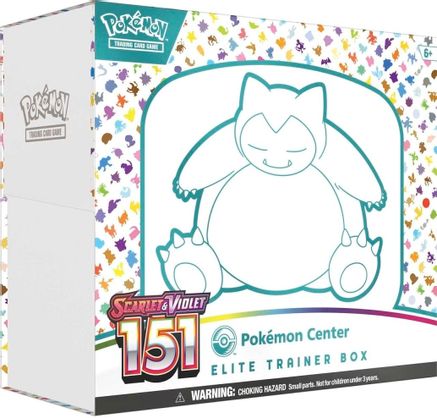

Notice that neither profile requires all three audiences to be equal. What matters is that more than one is real. The nostalgia product does not need a tournament scene, because collector demand for the original generation is deep and gets deeper as that generation's income grows. The One Piece flagship did not need investors at launch, because players and collectors were consuming supply on their own. Stacking is about redundancy: if one audience goes quiet, the price still has a reason to exist.
Now invert it. A product carried by exactly one audience inherits that audience's single failure mode, with nothing behind it to catch the fall.
Pure player demand fails on schedule. A set bought only for its tournament staples has an expiration date printed on it: the day those cards rotate out of the competitive format or get outclassed. If no collector ever wanted the set's artwork or characters, the demand does not age into nostalgia. It just stops.
Pure collector demand is durable but narrow. A niche product beloved by a small collecting community can hold value admirably and still be a difficult investment, because thin demand means thin liquidity. The price is stable until the day you try to sell into it at size.
Pure investor demand is the trap. When the only people buying a box are people planning to resell it, price is the entire thesis, and the demand is reflexive by definition. These markets rise fast, because every buyer removes supply and validates the story. They fall faster, because the first sustained dip converts every holder from a source of demand into a source of supply simultaneously. There is no player opening boxes at the bottom and no collector who wants the thing for its own sake. The bid simply vanishes.
The practical test is one question: if this product could never be resold, who would still buy it? If the honest answer is nobody, you are not investing in a trading card product. You are trading a story with other people who are also trading the story.
1. Name the audiences before you buy. For any product, write down who wants it besides people like you. If the list is empty, that is your answer.
2. Players are the engine, collectors are the floor. Player opening destroys the supply you hold, and collector demand is what remains after the competitive scene leaves. You want evidence of both.
3. Investor demand is a tenant, not a foundation. It pays rent while prices rise and leaves without notice. Never let it be the only name on the thesis.
4. Stacked demand buys you redundancy. Two or three audiences means a shock to one is absorbed by the others. Single-source demand means one failure mode ends the position.
5. Read the footprint, not the story. Daily sales, active supply, and long-after-rotation singles activity tell you which audiences are actually present, regardless of what the narrative claims.
TCG Quant tracks supply, demand, pull rates, destruction, and Long-Term Scores across Pokemon and One Piece sealed product, updated daily.
Explore TCG Quant →