 All Guides ↗
Every sealed product that became a long-term winner shares the same handful of characteristics, and every famous bust was missing at least one of them. This guide turns those characteristics into a repeatable checklist: the TCG Quant 7-Factor Framework. It is the lens the rest of this curriculum, and the platform itself, looks through.
A great sealed investment is a product people will still want to open years from now, whose supply is fixed or shrinking, bought at a price that does not already assume the happy ending. In practice that means seven things have to line up: a desirable product, durable demand, constrained supply, a sane price, real liquidity, a visible catalyst, and survivable risk. Most products fail on two or three of these. The rare ones that clear all seven are the boxes that compound for a decade.
Sealed investing content is full of one-off narratives: this box has a great chase card, that set is going out of print soon. Narratives are not wrong, they are just incomplete. Each one is a single factor wearing a trench coat. The framework forces you to check all seven before money moves.
| Factor | The question it answers | What good looks like |
|---|---|---|
| 1 · Product | Is the thing itself desirable? | Strong set quality, iconic chase cards, artwork people frame, a format collectors prefer. |
| 2 · Demand | Who wants it, and why? | Multiple audiences at once: players opening, collectors completing, investors holding, fans of the IP. |
| 3 · Supply | How much exists, and where is it headed? | Print run finished or clearly finite, sealed float shrinking through opening, reprint window closed. |
| 4 · Price | What are you paying relative to value? | A price that comps sensibly against peers and does not already price in years of appreciation. |
| 5 · Liquidity | Can you actually sell it? | Daily sales you can count, a spread you can live with, buyers at your size. |
| 6 · Catalyst | What changes the equation over time? | Out-of-print transition, anniversaries, chase card appreciation, a growing player base. |
| 7 · Risk | What invalidates the thesis? | Reprint exposure you can name, demand that does not depend on one card, a position you can exit. |
Score a product honestly on all seven before you buy. One weak factor is a discount opportunity. Two is a caution flag. Three or more is a pass, no matter how good the story sounds.
Factors 2 and 3 are the engine and everything else is the transmission. Sealed product appreciates for one structural reason: the supply of unopened boxes only moves in one direction after printing stops, while demand can persist or grow. Every box opened for its singles is destroyed as an investment vehicle, permanently. If people keep wanting to open a set after its print run ends, the surviving sealed copies get scarcer every single week.
This is why product quality feeds the engine instead of just decorating it. A set with beloved chase cards gets opened relentlessly, and heavy opening is what starves the sealed float. The chase card is not the investment. The chase card is the furnace that burns the supply of the thing you actually own.
You do not have to guess at this. The platform tracks active sealed supply and daily sales for every product, and the Destruction metric estimates how much of a print run has already been opened using graded population data and verified pull rates. When the guides in this curriculum say supply is shrinking, that claim is measured, not vibes.
The most common sealed investing mistake is paying a great-product price without checking whether it is a great-investment price. These are different things. A legendary set at 20x MSRP can be a worse buy than a solid set at 2x, because the legendary set's future is already in its price tag while the solid set's future is not.
The second most common mistake is ignoring liquidity until the day you sell. A portfolio marked at market value overstates what you can actually collect: fees, shipping, and the discount required to sell quickly all come out of the sticker number. A product that trades a handful of times per month can show a beautiful price chart and still be nearly impossible to exit at size.
Daily sales and weekly absorption are on every product card for exactly this reason. Two boxes at the same price with 10x different sales velocity are not the same investment. Check the volume before you size the position.
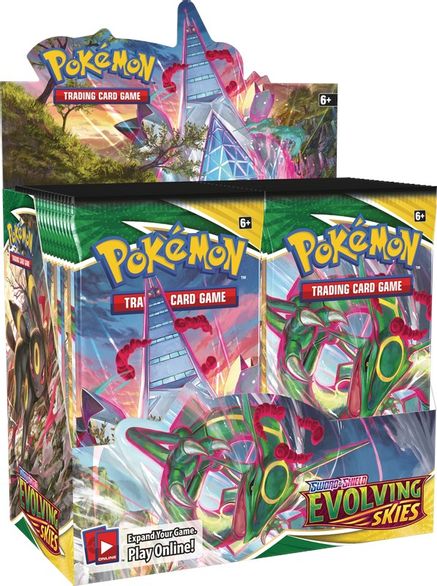
Here is the framework applied to two real boxes the platform tracks today, with live prices. The first is the textbook case where nearly everything aligned: an iconic chase lineup that kept the set getting opened years after printing stopped, demand from every audience at once, and a sealed float that destruction keeps thinning.
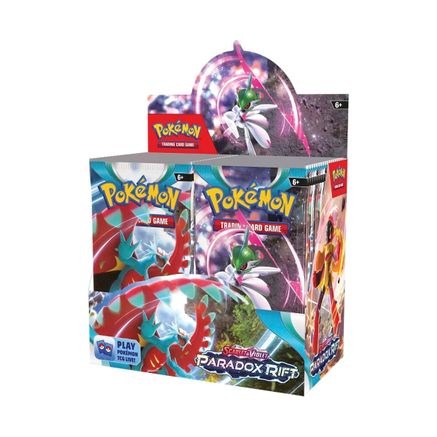
The second box is the harder, more common call: a legitimately good modern set trading near its MSRP multiple lows. Product quality is fine, price is reasonable, liquidity is strong. The open questions are demand durability and reprint risk, which is exactly what the framework is for. It does not tell you the answer. It tells you which questions are still open, so your position size can match your actual conviction instead of your enthusiasm.
1. Run all seven factors on every buy. Narratives sell you one factor. Frameworks make you check the other six.
2. Demand plus shrinking supply is the whole engine. If you cannot explain who will want to open this box in three years, there is no thesis.
3. Chase cards matter because they destroy supply, not because you plan to pull one.
4. Great product and great investment are different claims. The difference between them is the price you pay.
5. Liquidity is part of the return. A gain you cannot realize at size is a smaller gain than the chart says.
TCG Quant tracks supply, demand, pull rates, destruction, and Long-Term Scores across Pokemon and One Piece sealed product, updated daily.
Explore TCG Quant →